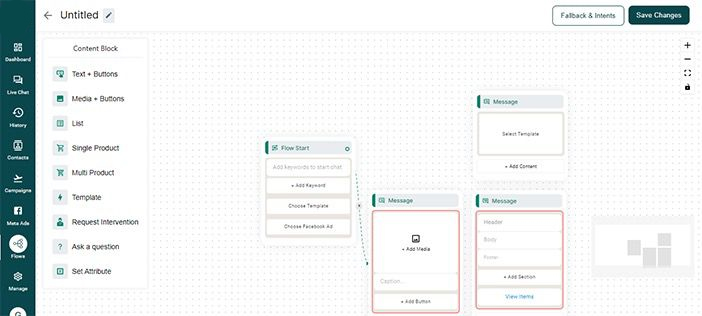
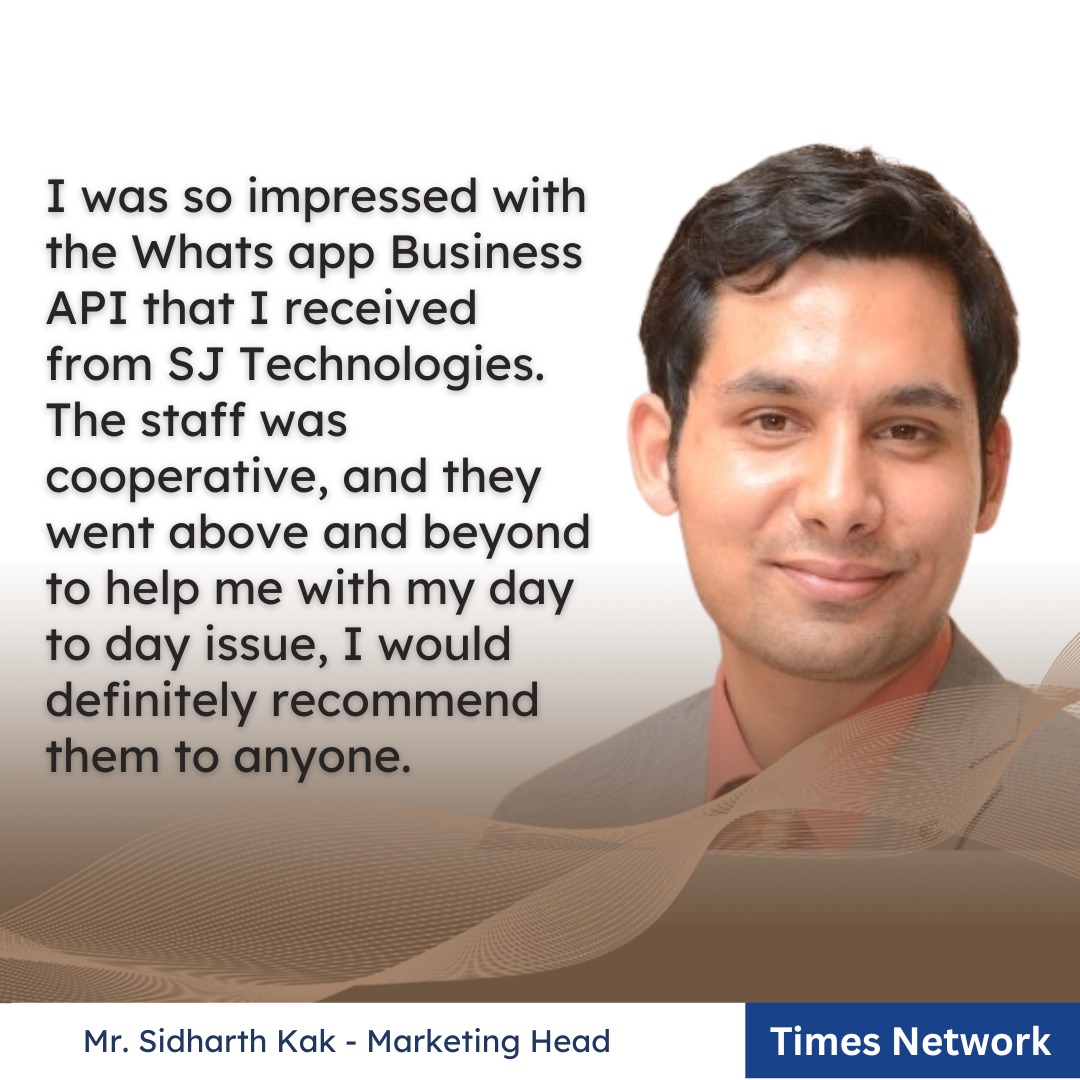
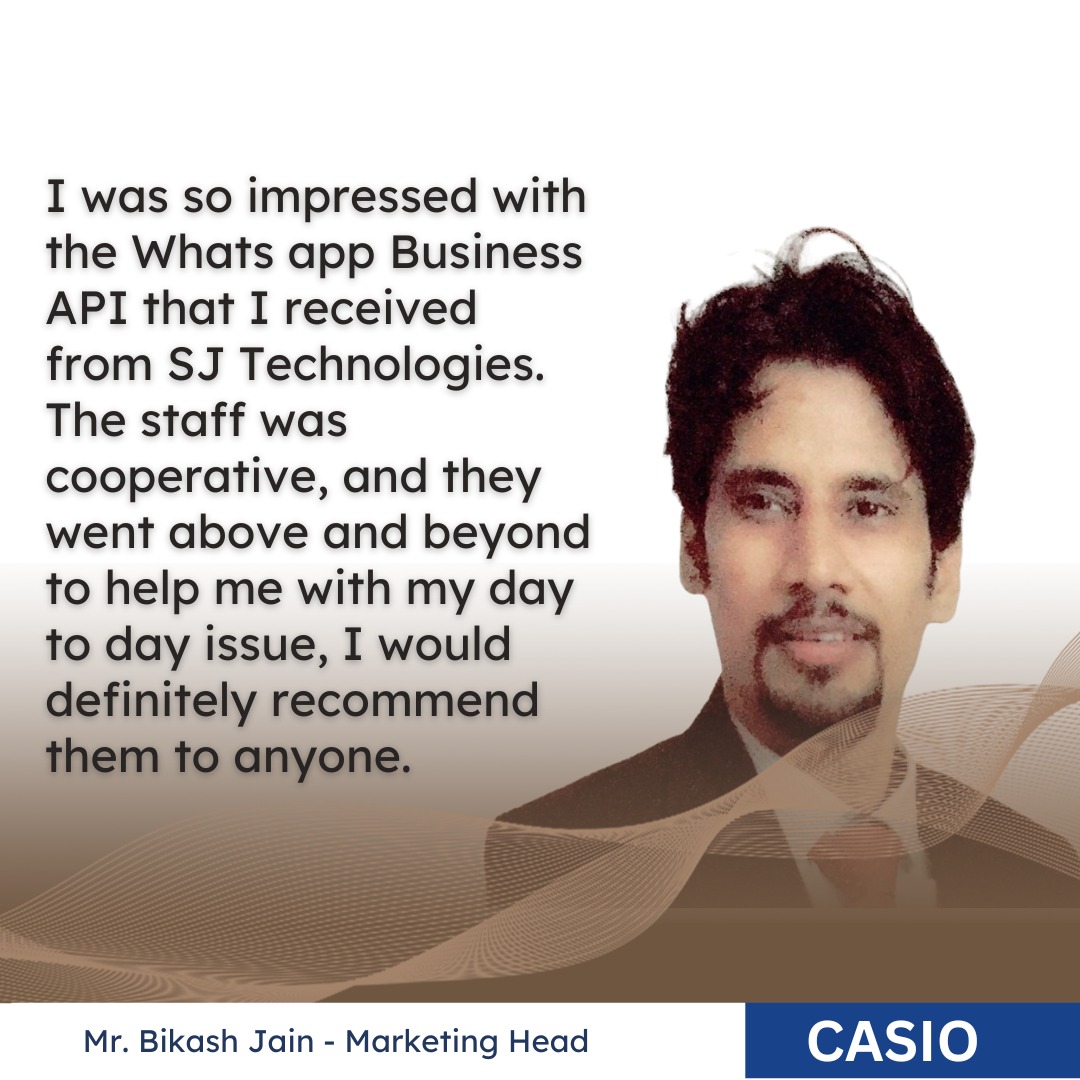
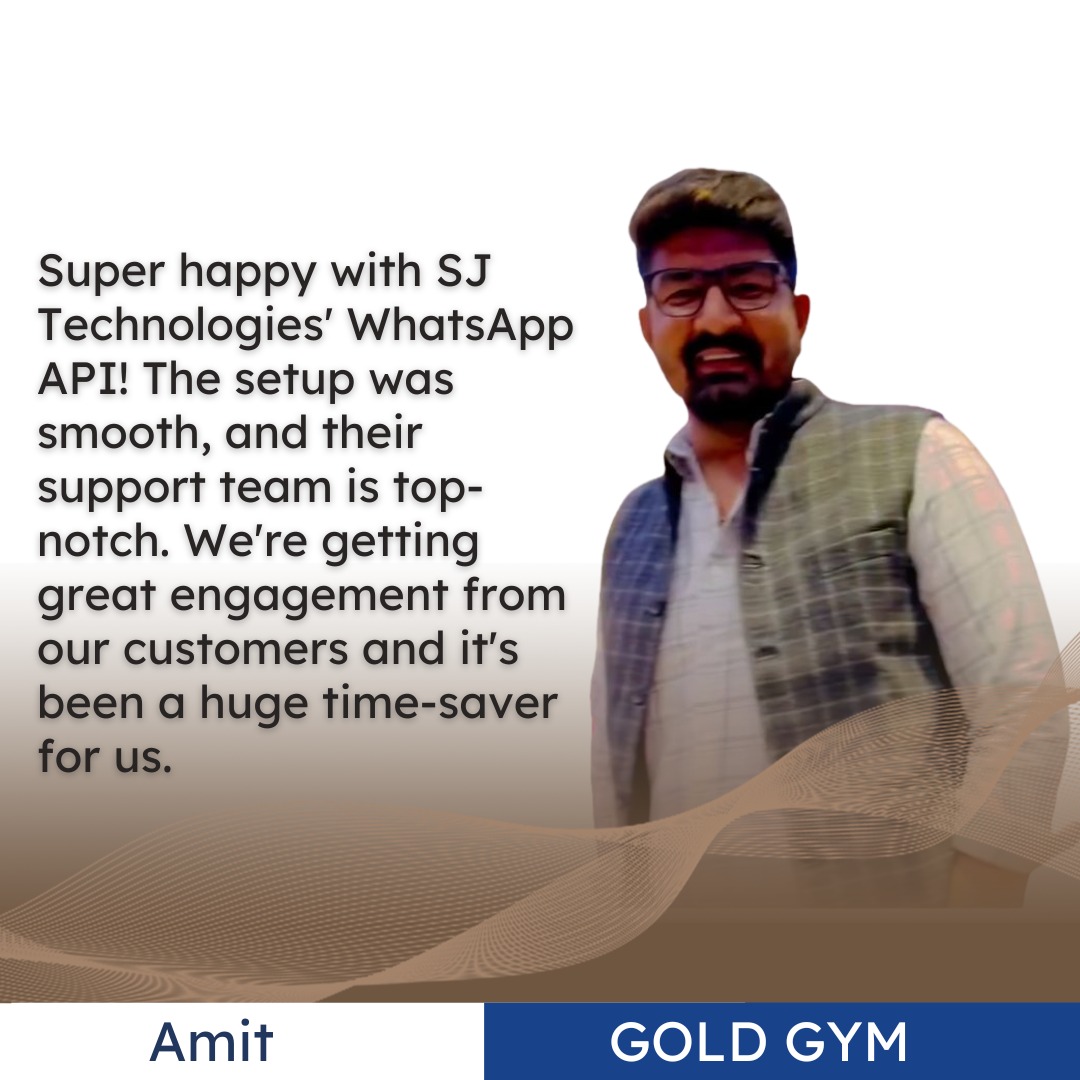
Unlock the power of meaningful conversations, customized customer experiences, and proactive service to strengthen your brand’s impact. Contact UsGrow your business with SJ Technologies — your trusted partner for WhatsApp Business API solutions.
Connect with your customers on WhatsApp—the platform they know and trust—and position your brand as their go-to choice for smooth, engaging interactions.
WhatsApp Business API Features with SJ Technologies
Massive Reach
Join 15M+ Indian businesses already using WhatsApp to connect with customers.
Trust & Credibility
Verified profiles and secure chats build customer confidence.
Efficiency & Automation
Save billions of hours with AI-powered bots handling routine queries.
Send tailored offers and updates based on customer behavior.
Proactive Engagement
Reach out with timely notifications, reminders, and promotions.
Seamless Integration
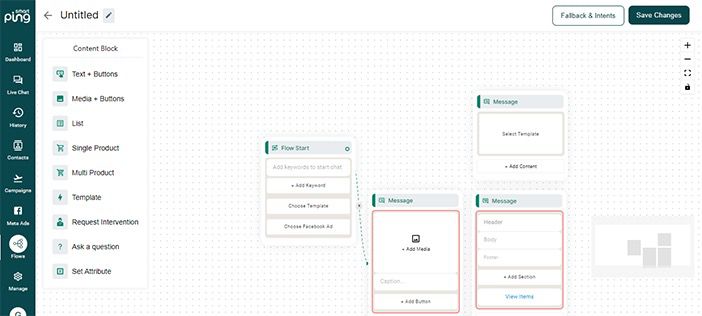
Connect WhatsApp API with your CRM, ERP, or marketing tools easily.
24/7 Availability
Stay connected chat support.
Begin your WhatsApp Business API journey with SJ Technologies in a few simple
stages:
Quickly set up your WhatsApp Business Account through SJ Technologies’ seamless onboarding process.
Provide your Facebook Business Manager ID to initiate brand verification.
Submit the required documentation to complete identity verification and apply for WhatsApp account activation.
Link your desired WhatsApp number and proceed to obtain the Green Tick badge via SJ Technologies.
Receive your API token post-verification and unlock the full potential of WhatsApp Business API
Begin your WhatsApp Business API journey with SJ Technologies in a few simple
stages:
With the latest changes introduced by Meta, businesses can now experience a more streamlined and transparent billing system for WhatsApp Business communications.
Key Highlights of the New Structure:
24-Hour Conversation-Based Billing:
Businesses are charged based on 24-hour conversation windows. The charges vary depending on the type of conversation or message being exchanged within this period.
User-Initiated Conversations:
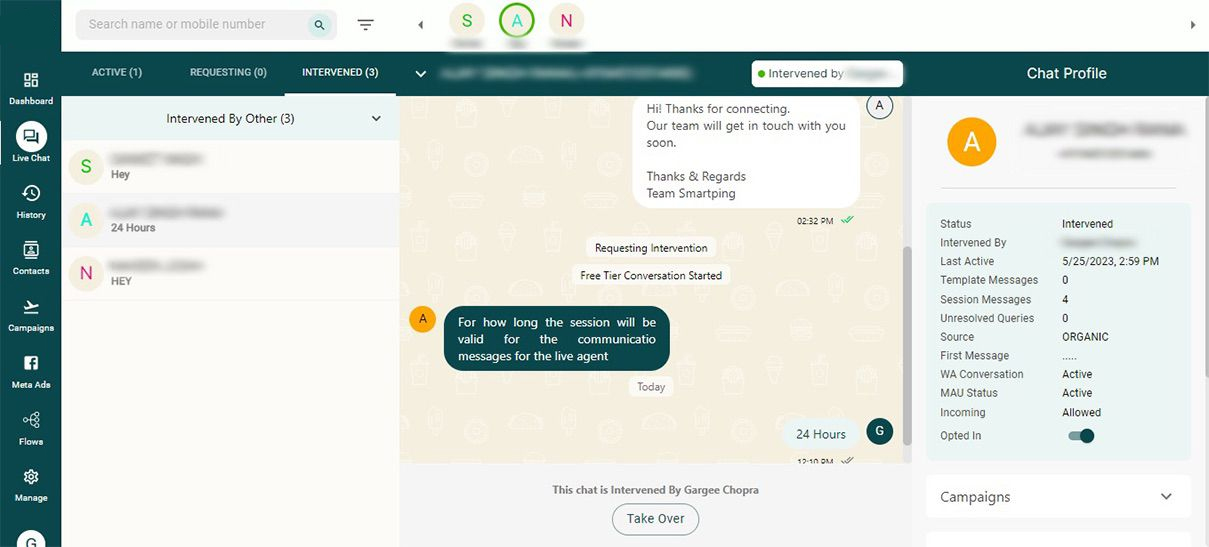
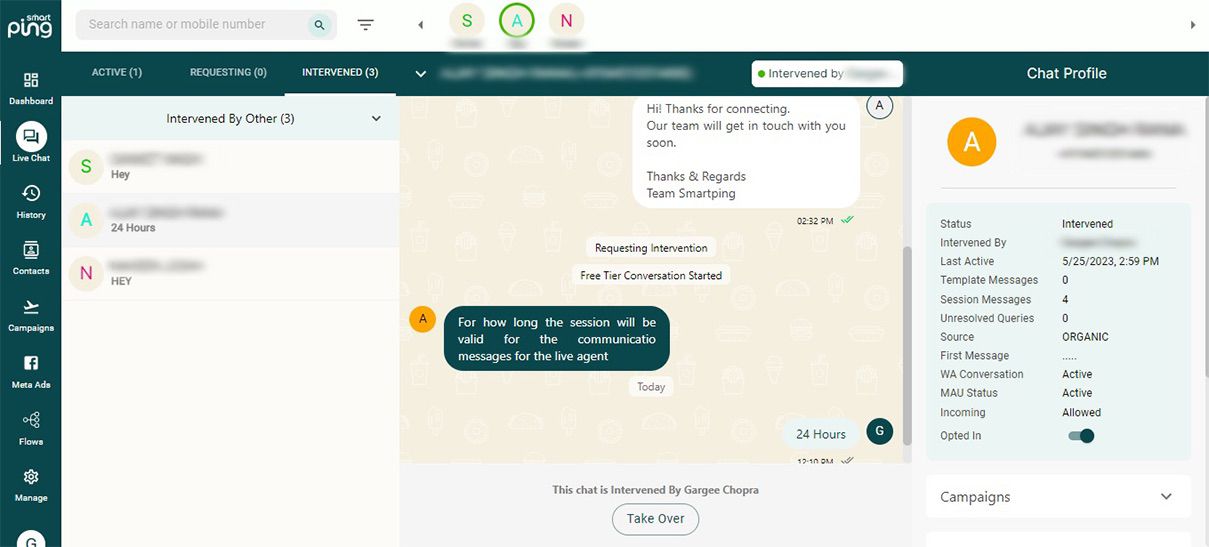
When a customer reaches out, it opens a Service Conversation, allowing businesses to provide support, address inquiries, and offer assistance.
Updated Conversation Categories:
The previous "Business-Initiated Conversations" have now been redefined into
three clear categories, each with a specific purpose:
Utility Conversations : For sending important transactional updates such as order confirmations, payment reminders, and shipment notifications.
Authentication Conversations : Used for verifying user identity,
conducting secure logins, and handling sensitive account actions.
Marketing Conversations : Designed for sending promotional offers,
product announcements, and personalized marketing content.
Template-Based Messaging:
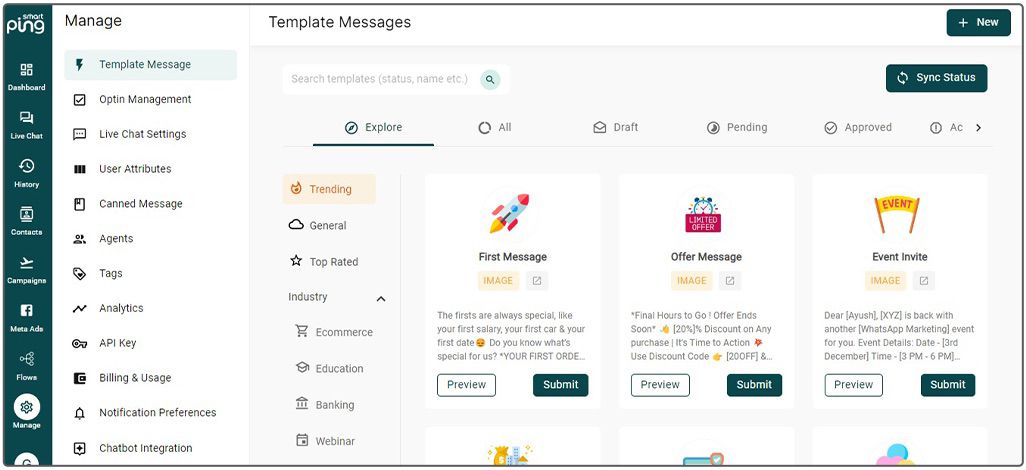
Starting June 1, 2023, businesses can initiate conversations through template messages. The category of the template used automatically defines the conversation type and its respective billing.
If a business sends a new template message during an active conversation of the same category, no additional charge is applied.
However, if a different category template is used within an ongoing conversation, both categories will be billed separately.
For Example :
During an active Utility conversation, if a Marketing template is sent, charges for both Utility and Marketing categories will apply.
Billing Based on Customer Location :
The pricing for each conversation is determined by the customer’s country code.
Key Highlights of the New Structure:
24-Hour Conversation-Based Billing:
Businesses are charged based on 24-hour conversation windows. The charges
vary depending on the type of conversation or message being exchanged within
this period.
Updated Conversation Categories:
The previous "Business-Initiated Conversations" have now been redefined into
three clear categories, each with a specific purpose:
○ Utility Conversations: For sending important transactional updates such as order confirmations, payment reminders, and shipment notifications.
○ Authentication Conversations: Used for verifying user identity, conducting secure logins, and handling sensitive account actions.
○ Marketing Conversations: Designed for sending promotional offers, product announcements, and personalized marketing content.
User-Initiated Conversations:
When a customer reaches out, it opens a Service Conversation, allowing
businesses to provide support, address inquiries, and offer assistance.
Why This Matters for Businesses:
These changes aim to create a more efficient and flexible messaging framework, enabling businesses to better engage with their customers while maintaining clear cost structures and maximizing communication effectiveness.
These changes create a more efficient and flexible messaging system for businesses to connect with customers.
They ensure clear pricing structures and enhance overall communication effectiveness.
Template-Based Messaging:
Starting June 1, 2023, businesses can initiate conversations through template messages. The category of the template used utomatically defines the conversation type and its respective billing
If a business sends a new template message during an active conversation of the same category, no additional charge is applied.
However, if a different category template is used within an ongoing conversation, both categories will be billed separately.
For example:
During an active Utility conversation, if a Marketing template is sent, charges for both Utility and Marketing categories will apply
Billing Based on Customer Location:
The pricing for each conversation is determined by the customer’s country code.
Why This Matters for Businesses:
These changes aim to create a more efficient and flexible messaging framework, enabling businesses to better engage with their customers while maintaining clear cost structures and maximizing communication effectiveness.
These changes create a more efficient and flexible messaging system for businesses to connect with customers.
They ensure clear pricing structures and enhance overall communication effectiveness.